Exhaust Fan Maintenance Guide for Nashville Restaurants
Published: February 12, 2026 | Nashville Hood Cleaning Pros
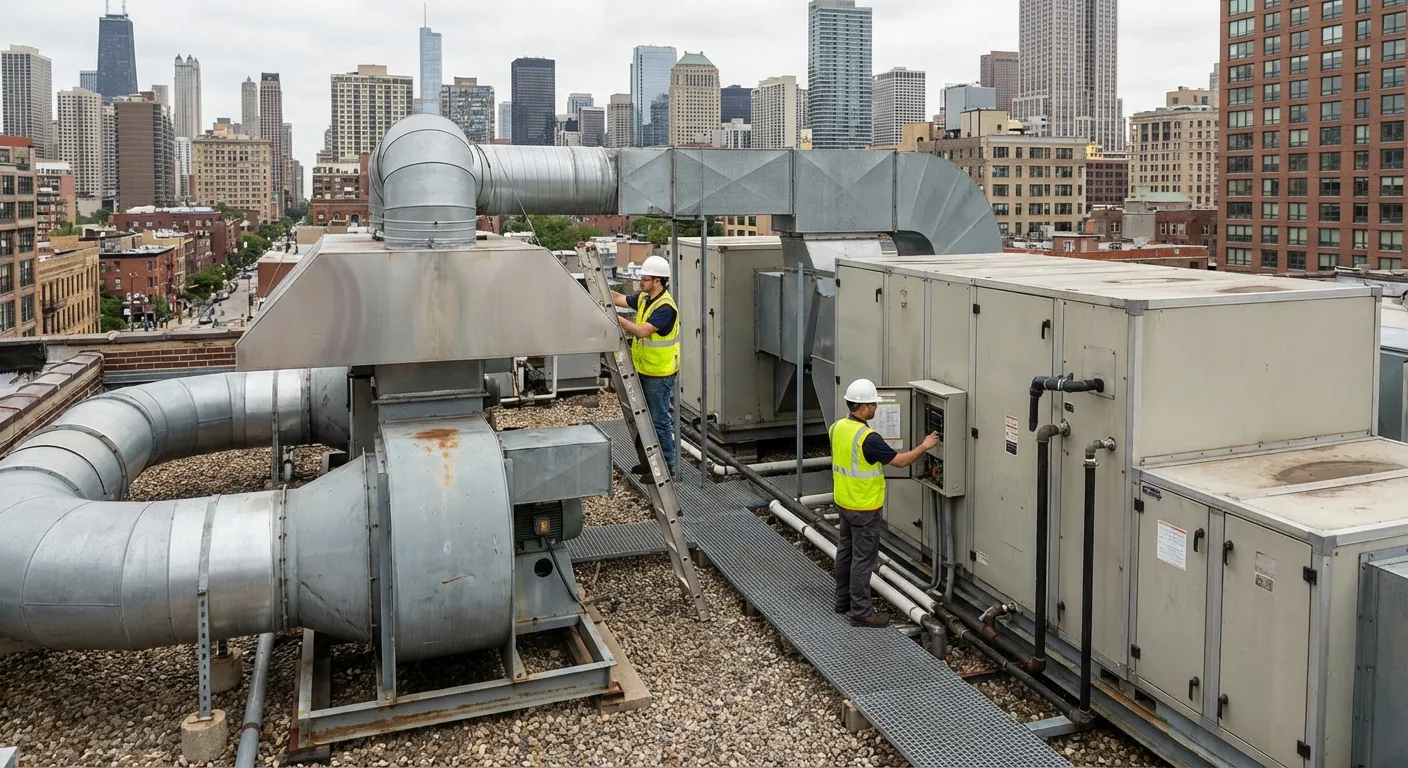
Your exhaust fan is the workhorse of your kitchen ventilation system. Located on the roof and exposed to the elements, it works constantly to pull hot air, smoke, and grease vapors out of your kitchen. Proper maintenance is essential for safety, efficiency, and longevity.
Why Exhaust Fan Maintenance Matters
A poorly maintained exhaust fan can lead to:
- Reduced airflow and poor kitchen ventilation
- Increased fire risk from grease buildup
- Higher energy costs as the motor works harder
- Premature equipment failure and costly repairs
- Health code violations during inspections
Monthly Visual Inspections
Designate a staff member to perform monthly visual inspections:
- Check for grease leaks or drips from the fan housing
- Inspect belts for wear, cracking, or fraying
- Listen for unusual noises (squealing, grinding, rattling)
- Verify the fan is spinning properly
- Check for roof damage or staining around the fan
Professional Maintenance Schedule
While daily and monthly tasks can be handled by your staff, certain maintenance requires professional service:
- Quarterly: Belt replacement and tension adjustment
- Semi-annually: Motor bearing lubrication
- Annually: Complete fan disassembly and deep cleaning
- As needed: Electrical connection inspection
Signs Your Fan Needs Attention
Call a professional if you notice:
- Excessive vibration or shaking
- The fan won't start or keeps shutting off
- Smoke or burning smells from the motor
- Visible damage to fan blades
- Significant decrease in airflow
Nashville Weather Considerations
Nashville's weather presents unique challenges for rooftop exhaust fans:
- Summer heat: Motors work harder; ensure proper ventilation
- Winter cold: Check for proper grease containment pad performance
- Storms: Inspect after severe weather for damage
- Humidity: Watch for rust and corrosion on metal components
Need Professional Fan Maintenance?
Our technicians are trained to maintain and repair all types of commercial kitchen exhaust fans.
Get a Free Quote Call (615) 235-5373